


By Jason Poole
Posted in
, ,
February 12, 2024
Prototyping Fidelity in Website Development | Article
CRAFTING DIGITAL EXPERIENCES
Prototyping Fidelity in Website Development
Designing the look and feel of a business site is a dynamic process that requires a delicate balance between structure and style. Prototypes, serving as the blueprints of a website, play a pivotal role in this journey.
In this article, we'll delve into the world of prototype fidelity, exploring the distinctions between low, mid, and high fidelity and understanding how they contribute to creating a seamless and visually appealing web experience.
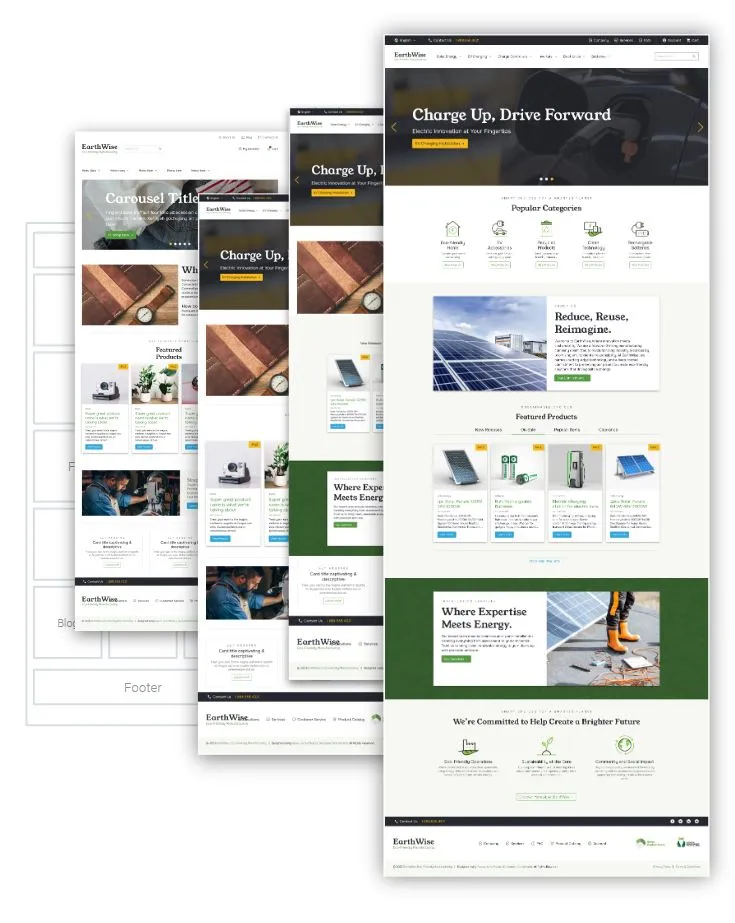
Learn the difference fidelity makes in website development prototyping.
Low-Fidelity: Building the Foundation
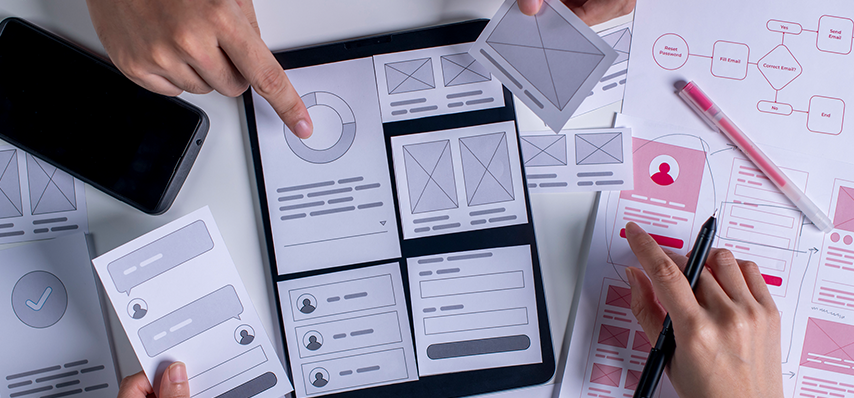
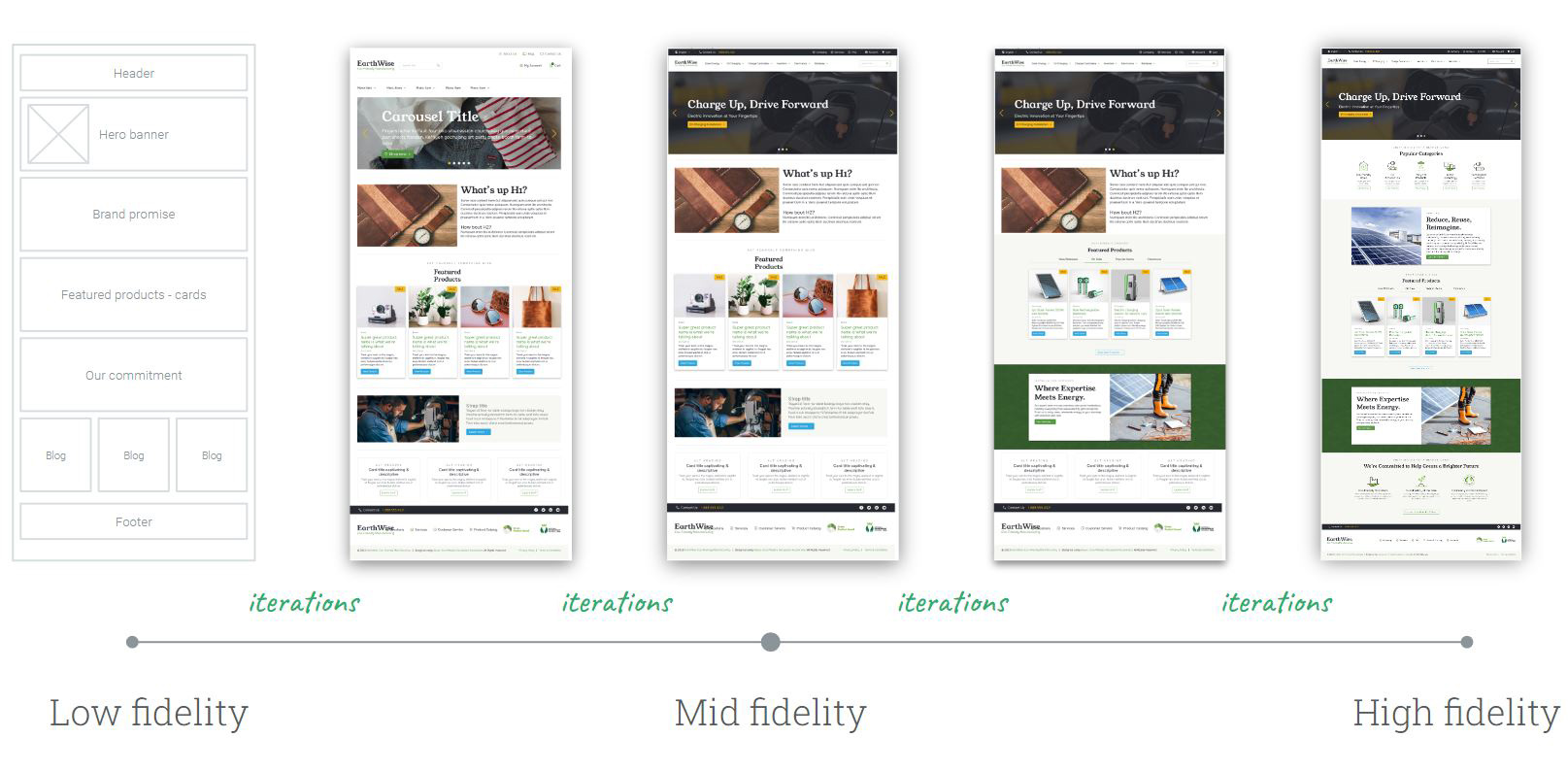
Low-fidelity prototypes act as the foundational layer in the website development process. These wireframes concentrate solely on defining the page layout, eschewing design elements to focus on structural elements and the overall flow.
Advantages of Low-Fidelity
- Rapid Iteration — With a focus on basic structure, low fidelity allows for quick iterations and modifications, ensuring that the core functionality aligns with user needs and business objectives.
- User Story Alignment — Low-fidelity prototypes are crafted around specific user stories, ensuring that the primary goals of the business and project are central to the design process.
Challenges of Low-Fidelity
- Visual Ambiguity — Stakeholders may struggle to visualize the end product, as low-fidelity prototypes lack the visual polish and aesthetics of the final design.
- Limited Functionality Insight — Low-fidelity may not offer a comprehensive understanding of the user experience, often lacking consideration for edge cases and unique scenarios.
Mid-Fidelity: Bridging Structure & Style
Mid-fidelity prototypes bridge the gap between structure and style by introducing basic design elements. This stage incorporates neutral styling, colours, and typography, giving stakeholders a more tangible sense of the website's future appearance while still prioritizing page flow and essential functionality.
Advantages of Mid-Fidelity
- Brand Alignment — Incorporating company-specific colours and typography helps stakeholders envision the website within the context of the brand, fostering a sense of identity and consistency.
- Enhanced Visualization — With the addition of basic design elements, mid-fidelity prototypes offer a clearer picture of the final product, allowing for more nuanced feedback.
Challenges of Mid-Fidelity
- Incomplete Aesthetics — While a significant leap from low fidelity, mid-fidelity may still lack the full visual richness of a completed design, potentially leading to some aspects being overlooked.
High-Fidelity: The Polished Final Product
High-fidelity prototypes represent the culmination of the design process, presenting a fully completed "look and feel" of the website. At this stage, all design elements, key interactions, and functionalities are crafted to deliver a refined user experience.
Advantages of High Fidelity
- Comprehensive Visualization — High-fidelity prototypes offer a comprehensive visual representation of the website, leaving little room for ambiguity and ensuring all stakeholders are aligned on the final design.
- Detailed User Experience — The incorporation of intricate design elements allows for a detailed examination of the user experience, ensuring that every interaction is smooth and intuitive.
Challenges of High Fidelity
- Time & Resources — Creating high-fidelity prototypes demands significant time and resources, making it crucial to solidify the underlying structure and functionality before investing in detailed design elements.
- Limited Iteration — While visually striking, high-fidelity prototypes may be less flexible for rapid iteration, making it essential to have a solid foundation from earlier stages.
In the world of website development, understanding the nuances of prototype fidelity is paramount. From low-fidelity, which sets the structural foundation, to mid-fidelity, which introduces design elements while maintaining a focus on functionality, and finally, to high-fidelity, where the polished final product comes to life – each stage plays a vital role in creating a web experience that aligns with user needs and business goals. By anchoring prototypes around specific user stories, development teams can ensure that every iteration contributes to a seamless and purposeful website.
Ready to visualize the changes your website deserves?
Book a call using the form below to learn how we can help your business create dynamic experiences online.
